Sign Up for Apple Class Action Lawsuit
Apple class action lawsuit is currently open:
Those who meet eligibility criteria should apply before the deadline December 19, 2026. Apple's $250 million Siri settlement pays $25 per eligible iPhone 15 Pro or 16 for buyers who say the promised Apple Intelligence features never arrived.
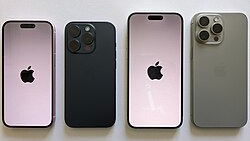
Apple Class Action Lawsuit
On June 10, 2024, Apple introduced Apple Intelligence and a rebuilt Siri at its developer conference. The demonstrations were specific. Say "Play that podcast that Jamie recommended," and Siri would find it. Say "Send the photos from the barbecue on Saturday to Malia," and Siri would do it. Apple said the new Siri would draw on a user's personal context, gain onscreen awareness of what they were looking at, and take hundreds of new actions inside and across apps.
That September, at an event Apple called "It's Glowtime," the iPhone 16 launched on the same message. The complaint describes an advertising campaign featuring the actor Bella Ramsey that ran on television, YouTube, social media and in movie theaters, showing the new Siri working. According to the complaint, those commercials depicted a fully operable Siri that did not exist.
The lawsuit alleges that none of it shipped. Plaintiffs say the iPhone 16 arrived without the promised Siri, that the feature was not built when Apple began advertising it, and that it was still not built months later. In March 2025 Apple publicly acknowledged the delay, and by that month's end the class period closes.
The case is a consolidated class action filed in the United States District Court for the Northern District of California, San Jose Division, before Judge Noël Wise. The operative complaint runs 212 pages and brings claims including California's Unfair Competition Law (Cal. Bus. & Prof. Code §§ 17200 et seq.) and unjust enrichment. Class counsel, the lawyers the court appointed to represent the class, are Clarkson Law Firm, Cotchett, Pitre & McCarthy, and Kaplan Fox & Kilsheimer. Apple denies all of the allegations and denies doing anything improper or unlawful. The settlement is not an admission of wrongdoing.
Apple Class Action Settlement - $250,000,000
Apple has agreed to pay $250,000,000. That figure is the whole of Apple's financial obligation under the agreement. There is no second pot, and Apple owes nothing beyond it. The money goes into a court-supervised account within 30 days of the court's preliminary approval order.
Four things come out of that total before anyone is paid. The payments to class members are the largest. Then the cost of notifying the class and running the claims process, which the settlement administrator has agreed to cap at $5,444,056. Then attorneys' fees and expenses for class counsel, in an amount the court has to approve. That request is due to be filed by November 16, 2026, so the number is not public yet. Under the court's standing order, class counsel intend to ask that ten percent of whatever fee is awarded be held back until the case is closed. Finally, a payment to the consumers who agreed to sue on behalf of everyone else and put their names to the case, the named plaintiffs, in an amount the court sets. Those payments are called service awards.
What is left is the net settlement amount, and it is what funds the per-device payments. Two terms are worth knowing. If money remains after every valid claim has been paid the maximum, the parties confer on what to do with it, and if paying it out is not practical a court-approved charity receives it, which is what a settlement means by cy pres. And in no event does any leftover money go back to Apple.
The court will hold a final approval hearing on February 24, 2027 at 9:00 a.m. Payments are made after the court approves the settlement and after any appeals are resolved.
Deadline for filing a claim: December 19, 2026
iPhone 16, 15 Pro Class Action Payout: $25 per eligible device, up to $95
The settlement pays $25 for each eligible device. That is the stated figure, and it is per device rather than per person, so someone who bought two qualifying iPhones in the window can claim for both.
The amount moves. If the valid claims add up to less than the net settlement fund, every payment is raised by the same proportion, so the money available is shared out in proportion to what each person claimed, which is what a settlement means by pro rata. The increase stops at a hard ceiling of $95 per device. If claims add up to more than the fund, payments are reduced the same way. The final figure also depends on the attorneys' fees, service awards and administration costs the court approves.
So $95 is a ceiling, not an expectation. This settlement has had unusually heavy news coverage, and claim volume is the single biggest thing that moves the number down. Nobody will know the real figure until the claims period closes and every claim has been checked.
The claim form offers two ways to be paid. A digital payment has to be requested through the settlement administrator's own website. A mailed paper check goes to the address on the claim form, and that is the method that applies to a claim filed by mail. Digital payments usually move faster than mailed checks, though that is a tendency rather than a rule, and a check, once deposited, is money in your account with nothing left stranded on a card. Eligible payments are sent after the court gives final approval and any appeals are resolved.
What Big-Tech Settlements Paid Per Device


iPhone 16, 15 Pro Class Action Eligibility
You are in the class if you bought one of seven iPhone models in the United States between June 10, 2024 and March 29, 2025, for something other than resale, and you live in the United States. The seven are the iPhone 16, 16e, 16 Plus, 16 Pro and 16 Pro Max, plus the iPhone 15 Pro and 15 Pro Max.
The most common mistake is the iPhone 15. A standard iPhone 15 or 15 Plus is not in the class. Only the 15 Pro and 15 Pro Max are, because those are the models Apple marketed as able to run the new Siri. The whole iPhone 16 line qualifies, including the 16e. The claim form also asks you to confirm something about yourself: that when you bought the phone, you expected to receive the Siri Apple Intelligence features, and did not get them. That is a statement about what you understood at the time, and only you can make it.
You do not need a receipt. There is nothing to upload and no proof of purchase to dig out. The form asks for your iPhone's serial number, which sits in Settings under General, then About. If you cannot find it, the form accepts your Apple Account email address and the phone number for that iPhone instead.
Unusually, this claim form does not ask you to certify under penalty of perjury. The settlement agreement says so directly. You are confirming the facts are true, and every claim is still subject to audit, review and validation against Apple's own records. Claim the devices you are confident you bought in the window; an accurate claim is the one that gets paid. Apple's own employees, officers and directors are excluded, as are the judges assigned to the case and their families.
iPhone 16, 15 Pro Class Action Claim Form
1
2
3
FAQ
The settlement pays $25 for each eligible iPhone. That figure can rise as high as $95 per device if relatively few people claim, or fall if a great many do, because the fund is divided among the valid claims that come in. The final amount is not known until the claims period closes.
Seven models qualify: the iPhone 16, 16e, 16 Plus, 16 Pro and 16 Pro Max, and the iPhone 15 Pro and 15 Pro Max. A standard iPhone 15 or iPhone 15 Plus does not qualify, which catches a lot of people out. The phone must have been bought in the United States between June 10, 2024 and March 29, 2025.
No. There is nothing to upload and no receipt to find. The claim form asks for your iPhone's serial number, which you will find on the device under Settings, then General, then About. If you no longer have the phone or cannot find the number, the form accepts your Apple Account email address and the phone number for that iPhone instead.
Yes. The payment is per eligible device rather than per person, so someone who bought two qualifying iPhones during the class period can claim for both. The settlement requires a separate claim form for each device, so each phone is handled as its own claim rather than being combined into one.
The court's deadline is December 21, 2026. Chimo works to December 19, 2026, so that a claim sent by mail is postmarked in good time. That date already moved once, when the court pushed the claims, objection and exclusion deadlines back by about three weeks in August 2026.
Not straight away. The court holds a final approval hearing on February 24, 2027, and eligible payments are sent after the court approves the settlement and after any appeals are resolved. Settlements of this size commonly take months after that hearing before money reaches people.
Apple denies all of the allegations and denies doing anything improper or unlawful, and the settlement is not an admission of wrongdoing by Apple. Filing a claim is simply how you take your share of a fund the court is supervising. What you confirm on the form is about your own purchase and what you expected at the time.
Sources
These are the court's own records for this case. They are hosted here unchanged, so you can check anything on this page against the documents themselves.
- Claim Form (PDF) Claim form · U.S. District Court, Northern District of California · Case 5:25-cv-02668-NW
- Business Claim Form (PDF) Claim form · U.S. District Court, Northern District of California · Case 5:25-cv-02668-NW
- Long Form Notice (PDF) Class notice · U.S. District Court, Northern District of California · Case 5:25-cv-02668-NW
- Settlement Agreement (PDF) Settlement agreement · U.S. District Court, Northern District of California · Case 5:25-cv-02668-NW
- Second Consolidated Amended Class Action Complaint (PDF) Complaint · Filed May 1, 2026 · U.S. District Court, Northern District of California · Case 5:25-cv-02668-NW
- Consolidated Amended Class Action Complaint (PDF) Complaint · Filed July 21, 2025 · U.S. District Court, Northern District of California · Case 5:25-cv-02668-NW
- Order Granting Preliminary Approval of Class Action Settlement (PDF) Court order · Filed July 17, 2026 · U.S. District Court, Northern District of California · Case 5:25-cv-02668-NW
- Motion for Preliminary Approval of Class Action Settlement (PDF) Court record · Filed May 5, 2026 · U.S. District Court, Northern District of California · Case 5:25-cv-02668-NW
- [Proposed] Order Granting Preliminary Approval of Class Action Settlement (PDF) Court record · Filed May 5, 2026 · U.S. District Court, Northern District of California · Case 5:25-cv-02668-NW
- Joint Declaration of Ryan Clarkson, Brian Danitz and Laurence King (PDF) Court record · Filed May 5, 2026 · U.S. District Court, Northern District of California · Case 5:25-cv-02668-NW
- Declaration of Colin Weir (PDF) Court record · U.S. District Court, Northern District of California · Case 5:25-cv-02668-NW
- Declaration of Steven P. Gaskin (PDF) Court record · U.S. District Court, Northern District of California · Case 5:25-cv-02668-NW
- Declaration of Bryan Heller (PDF) Court record · U.S. District Court, Northern District of California · Case 5:25-cv-02668-NW
- Declaration of Jonathan D. Carameros (PDF) Court record · U.S. District Court, Northern District of California · Case 5:25-cv-02668-NW
- Motion to Reset Final Approval Hearing Date (PDF) Court record · Filed July 27, 2026 · U.S. District Court, Northern District of California · Case 5:25-cv-02668-NW
- Order Granting Motion to Reset Final Approval Hearing Date (PDF) Court order · Filed August 13, 2026 · U.S. District Court, Northern District of California · Case 5:25-cv-02668-NW
- Joint Stipulation and [Proposed] Order to Extend Deadlines (PDF) Court record · U.S. District Court, Northern District of California · Case 5:25-cv-02668-NW
- Order Granting Stipulation to Extend Deadlines (PDF) Court order · Filed August 28, 2026 · U.S. District Court, Northern District of California · Case 5:25-cv-02668-NW
The full case file is on the court docket: view the docket.
Last updated