Dollar General Class Action Lawsuit
Dollar General class action lawsuit.
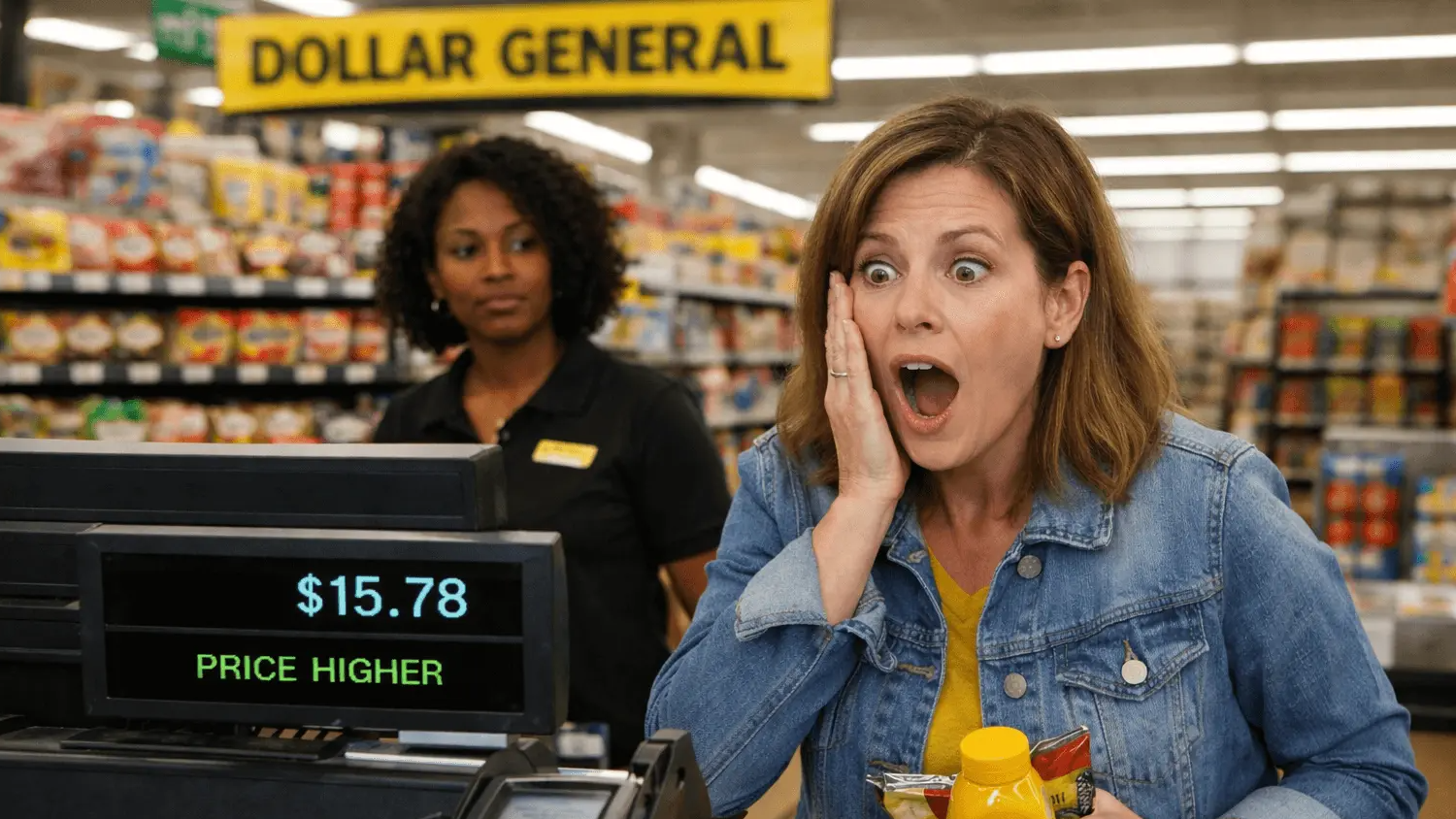
Dollar General allegedly charged shoppers more at checkout than shelf prices, systematically overcharging customers for the same items nationwide.
Dollar General Class Action Lawsuit
A class action lawsuit has been filed against Dollar General due to allegations that customers were routinely charged higher prices at checkout than the prices advertised on store shelves. The lawsuit came about after consumers noticed and documented repeated price mismatches at Dollar General stores—where the shelf price shown in the aisle did not match the higher price charged at checkout.
Over time, shoppers submitted complaints to Dollar General and state consumer protection agencies, often with photos or receipts showing the discrepancy. These reports suggested the issue wasn’t isolated, but part of a systemic pricing problem affecting many stores nationwide.
The Dollar General Overcharging class action case claims that Dollar General used uniform pricing practices that resulted in shoppers paying more—or sometimes less—than posted shelf prices at stores nationwide. These alleged discrepancies form the basis of the Dollar General Overcharging legal claims under state consumer protection laws.
The lawsuit, Jennifer Braun v. Dolgencorp, LLC d/b/a Dollar General, was filed in the Superior Court of New Jersey, Law Division, Middlesex County, under Case No. MID-L-00950-25. The case was brought by named plaintiffs including Jennifer Braun, Joseph Wolf, Carmen Wolf, Lori Hartline, Sharlia Cotton, and Ryan Button on behalf of affected consumers.
The action covers purchases made between October 10, 2016, and November 19, 2025. After several years of litigation, the parties reached a proposed settlement that received preliminary court approval in December 2025.
Dollar General Class Action Settlement - $15,000,000
The Dollar General Overcharging settlement update confirms that Dollar General has agreed to resolve claims that customers were charged prices at checkout that did not match advertised shelf prices. The Dollar General Overcharging lawsuit settlement amount is structured as consumer benefits rather than a single lump-sum fund. The parties define Total Settlement Value as $15,000,000, made up of an $8.5M cash Common Fund plus injunctive relief valued at no less than $6.5M. The true value could exceed $15M if the injunctive relief costs more than $6.5M.
The settlement was structured this way because the core harm in the case wasn’t a single, uniform dollar loss, but many small, inconsistent pricing discrepancies spread across millions of transactions over nine years. From the case record, three practical issues drove the structure:
- Tiny, hard-to-prove overcharges - Most alleged overcharges were small (often cents to a few dollars) and varied by item, store, and date. A pure cash fund would either require heavy proof that most consumers don’t have, or result in pennies-per-person payouts.
- Proof exists for some consumers—but not most - Regulators and some shoppers had photos, complaints, or receipts showing mismatches. The settlement preserves cash payments for provable claims ($10 or actual overcharge), while avoiding unfair dilution by unprovable claims.
- Ongoing conduct mattered as much as past refunds - Plaintiffs alleged systemic pricing failures tied to shelf labels and POS systems. The court-approved structure prioritizes forward-looking relief—forcing Dollar General to fund pricing accuracy improvements—rather than spending the entire value on administration-heavy micro-payments.
Under the settlement, eligible class members may receive cash payments of $10 or the amount of the actual overcharge (whichever is higher) for each approved claim, up to two claims per household (maximum $20). In addition, all class members are eligible for a one-time $3 in-store benefit on a qualifying purchase, even without proof of an overcharge.
Deadline for filing a claim: September 18, 2026
Merchandise Class Action Payout: $3 -$20+
Under the settlement, consumers who submit valid documentation of a price mismatch may receive $10 or the amount of the actual overcharge (whichever is higher) per approved claim, up to two claims per household (maximum $20). All eligible class members—regardless of proof—can also receive a $3 in-store benefit, creating a baseline payout even without documentation.
To be clear, cash payments are only for "Approved Valid Claims". Meaning that claimants must show wither a complaint that was made to Dollar General or a government agency within 30 days or evidence like photos documenting the mismatch.
The agreement also builds in “enhanced notice” for the $3 benefit through auto-clipping: if you have a myDG account, the coupon can automatically appear in your wallet and be applied at checkout when you enter your phone number—even if you didn’t know about it.
Factors affecting payout include the number of approved claims, whether proof of an overcharge is provided, and whether multiple claims are submitted from the same household.
The Dollar General Overcharging settlement payout date is expected after final court approval and claims processing, likely several months after the April 13, 2026 claim deadline. Delays can occur due to appeals, verification reviews, or fraud checks.
Retail Price Accurary Class Action Payouts

Merchandise Class Action Eligibility
Eligibility in the Dollar General Overcharging Class Action is intentionally narrow for cash payouts and broad for basic relief, reflecting how the court balanced proof, fairness, and scale.
The settlement class includes all U.S. consumers who purchased items at Dollar General between October 10, 2016 and November 19, 2025 where the checkout price did not match the shelf price. However, the court drew a sharp distinction between being in the class and qualifying for cash compensation.
To receive money, claimants must show that the alleged overcharge was real, documented, and timely identified. That’s why the claim form asks whether you filed a complaint within 30 days of purchase or retained contemporaneous evidence, such as photos showing the shelf tag next to the register price. The court relied heavily on these criteria to ensure payouts went to consumers who could demonstrate an actual discrepancy, rather than speculative or memory-based claims.
A unique feature of this case is the household-based limit: only two cash claims per household are allowed, and if multiple claims are submitted, the earliest valid filing controls. This rule was added to prevent duplicate recoveries from shared shopping trips while still allowing multiple legitimate incidents to be compensated.
Notably, the settlement also recognizes that most consumers lack proof years later. That’s why all class members remain eligible for the $3 in-store benefit without documentation, ensuring meaningful relief even when cash eligibility is not met.
Merchandise Class Action Claim Form
1
2
3
FAQ
You may qualify if you bought items at Dollar General in the U.S. between Oct 10, 2016 and Nov 19, 2025 and the checkout price didn’t match the shelf price.
For cash, you generally need either a complaint submitted within 30 days (to Dollar General or a government agency) or contemporaneous evidence like photos documenting the mismatch.
For each approved claim, payments are $10 or the actual overcharge (whichever is higher).
Yes. Cash claims are capped at two approved claims per household (maximum $20, unless the documented overcharge total is higher). If multiple household claims hit the cap, the earliest valid claim controls.
Expect fields like: item, price paid, shelf price, store location, and date of purchase, plus whether your proof fits the complaint option or photo/evidence option.
Your claim must be submitted online or received by April 13, 2026 (11:59 pm ET).
Yes. The settlement includes a one-time $3 off $10 in-store benefit that does not require proof of an overcharge.
It’s designed to be easy to use: there’s a dedicated redemption period, and for shoppers with a myDG account, it may be auto-clipped and applied when using the account at checkout.