Samsara Biometric Privacy Settlement Class Action Lawsuit
Samsara dash cam settlement: $3.95 million resolved a lawsuit's claims that its dual-facing dash cams collected drivers' biometric data without consent.
Chimo is a private monitoring and filing service and is not the court, the settlement administrator or a law firm.
What happens next with the Samsara Biometric Privacy Settlement settlement
The claim deadline passed on September 29, 2025. New claims for this settlement are no longer being accepted.
Payments come after approval, and after any appeals. Anyone who objected to the settlement can ask a higher court to look at it again — an appeal — and that has to finish first. Eligible payments are sent once approval is final, and the stretch from a claim deadline to money in hand often runs a year or more. It varies from one settlement to the next.
Filed this claim with Chimo? The status of your claim is on the claims page in your account.
Settlements you can still claim in November 2026

Simplilearn
$120

GoodRx
$12
Visa & Mastercard
$380
Samsara Biometric Privacy Settlement Class Action Lawsuit
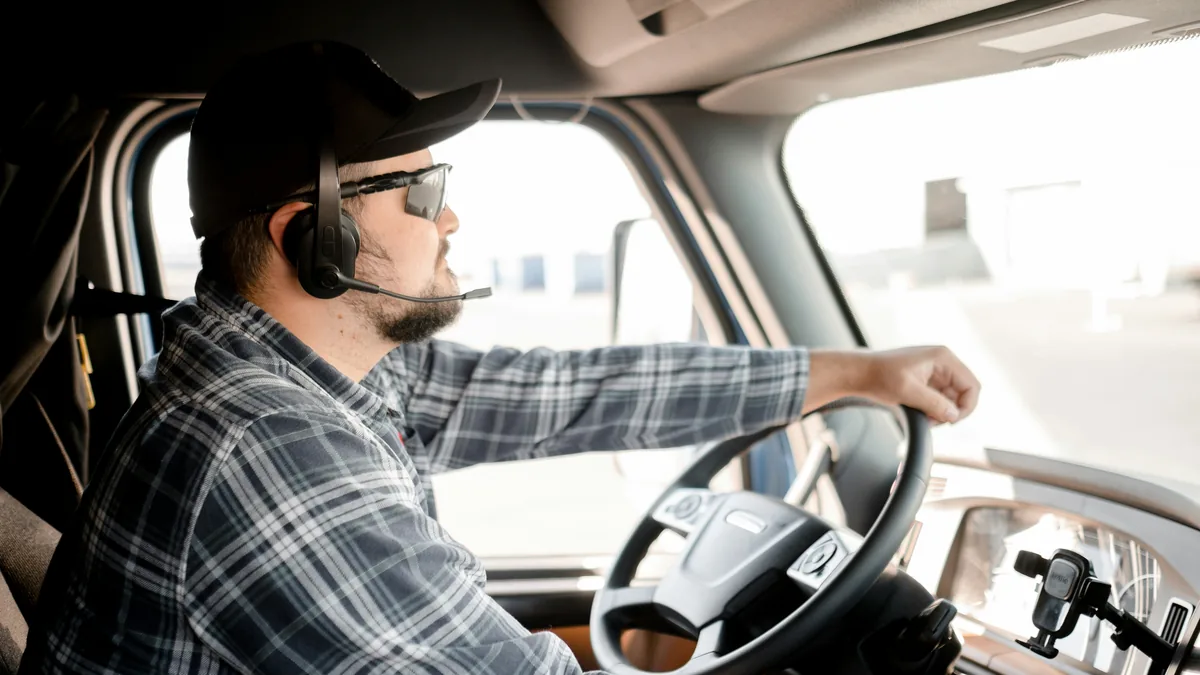
Drivers of work vehicles fitted with Samsara dash cams, facing the driver as well as the road, sued over what those cameras collected. Samsara supplied businesses with dual-facing dashboard cameras and the option to switch on a feature called Camera ID. The lawsuit alleged that through those cameras, including Camera ID, Samsara collected, stored, used and disclosed drivers' biometric data, meaning information taken from a person's body, such as a scan of their face, that can identify them.
The law at the center of the case is the Illinois Biometric Information Privacy Act, known as BIPA, which bars private companies from collecting or holding a person's biometric data without meeting the law's requirements. The case, Karling v. Samsara Inc., No. 2025-LA-0000175, is in the Circuit Court for the 17th Judicial Circuit, Winnebago County, Illinois, before Judge Ronald A. Barch. David Karling, a member of the class, brought it on behalf of the group, represented by Lieff Cabraser Heimann & Bernstein and Milberg Coleman Bryson Phillips Grossman.
Samsara denies that it broke BIPA or did anything wrong, and the court did not decide who was right. Both sides settled to avoid the time, expense and uncertainty of litigation. Samsara agreed to a $3,950,000 settlement fund and a year of a privacy service called Privacy Shield, at no cost to class members.
Samsara Biometric Privacy Settlement Class Action Settlement - $3,950,000
A $3,950,000 settlement has been reached in the Samsara dash cam lawsuit. This Samsara dash cam settlement update covers drivers whose vehicles were equipped with dual-facing Samsara dash cams between December 16, 2016, and June 12, 2025. The case, Karling v. Samsara Inc. (Case No. 2025-LA-0000175, Circuit Court of Winnebago County, Illinois, Hon. Ronald A. Barch), alleges that Samsara collected drivers’ biometric data without consent, violating Illinois’ Biometric Information Privacy Act.
As part of the Samsara dash cam lawsuit settlement, eligible class members could receive a cash payout from the $3.95M fund, distributed on a pro rata basis depending on the number of approved claims. In addition to payments, class members were eligible for one year of Privacy Shield, a privacy protection service, at no cost to them.
The deadline to file a claim was September 29, 2025. Only claims submitted by this deadline and approved were eligible for payment and benefits.
Claims closed: September 29, 2025
Dash Cam Class Action Payout
The claim deadline for the Samsara dash cam settlement was September 29, 2025, and it has passed. New claims can no longer be filed.
Each driver with an approved claim was eligible for an equal share of the $3,950,000 fund after court-approved deductions. The lawyers for the class said they would ask for attorneys' fees of no more than $2,500,000 plus expenses, which they described as one third of a settlement worth at least $7,500,000 once Privacy Shield is counted, and for a $5,000 service award for David Karling for bringing the case. The cost of running the settlement and of Privacy Shield also came out of the fund, and the court could award less than was requested. If the full fee and award were granted, at most about $1,445,000 would be left before expenses and those two costs. The notice gave no per-driver estimate, because the amount depended on how many valid claims were filed.
Payments were to be made only if the court approved the settlement; the final approval hearing was scheduled for October 16, 2025. Payments to eligible claimants were to be made by check, or possibly electronically. Checks expire 120 days after they are issued, and money from uncashed checks goes to a nonprofit approved by the court. Privacy Shield came with an enrollment code on the postcard notice mailed to class members; a driver who did not receive a postcard had to file a claim to get it.
Dash Cam Class Action Eligibility
The Samsara settlement covered two groups of drivers. The first was anyone who, between December 16, 2016, and June 12, 2025, drove a vehicle in Illinois that was equipped with a dual-facing Samsara dash cam. The second was Illinois residents who drove such a vehicle outside Illinois during the same period.
Drivers were covered whether they were employees or independent contractors. The claim form asked for your name, your mailing address, the company or companies you were working for when you drove a vehicle with the camera, and the approximate dates you drove it. A camera that faces only the road does not match the class definition, which is limited to dual-facing cameras.
Excluded were the judges who presided over the case and their families, Samsara and the companies it controls or is controlled by, and anyone who asked to be left out of the settlement.
FAQ
Camera ID is a feature that Samsara customers could switch on in its dual-facing dash cams. The lawsuit alleges that through the cameras, including Camera ID, Samsara collected drivers' biometric data without meeting the requirements of Illinois law.
The notice did not estimate how many drivers were in the class. It said each share would depend on the number of valid claim forms, with every approved claimant eligible for an equal share of what was left of the $3,950,000 fund after deductions.
The notice described two benefits: an equal share of the cash fund for each approved claimant, and one year of a privacy protection service called Privacy Shield. The full terms, including any other commitments by Samsara, are in the settlement agreement.
According to the notice, Privacy Shield was included to promote privacy in line with BIPA, not because of any concern about the security of data the cameras collected. Class members were eligible for one year of it at no cost to them.
Checks expire 120 days after they are issued. Money from uncashed checks does not go back to Samsara; it goes to a nonprofit agreed by the parties and approved by the court, under Illinois rules for such recipients.
Class Actions
Unclaimed Property
Sign up for updates on new lawsuits
and unclaimed money opportunities
Chimo AI Inc. is a private company. We are not a law firm, do not give legal advice, and are not affiliated with or endorsed by any court, settlement administrator, defendant or government agency.