G. Skill Class Action Lawsuit
G. Skill class action lawsuit.
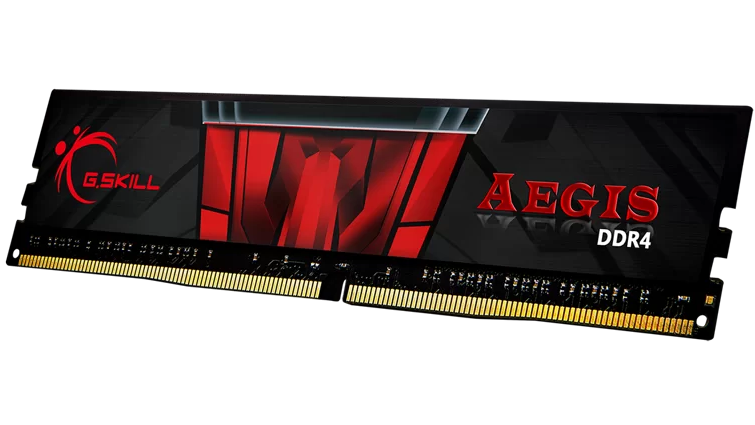
G.Skill allegedly misled buyers by advertising RAM speeds as “out-of-the-box,” when higher speeds required overclocking or BIOS tweaks.
What happens next with the G. Skill settlement
The claim deadline passed on April 5, 2026. New claims for this settlement are no longer being accepted.
Payments come after approval, and after any appeals. Anyone who objected to the settlement can ask a higher court to look at it again — an appeal — and that has to finish first. Eligible payments are sent once approval is final, and the stretch from a claim deadline to money in hand often runs a year or more. It varies from one settlement to the next.
Filed this claim with Chimo? The status of your claim is on the claims page in your account.
Settlements you can still claim
Leesa, Brooklyn Bedding, Helix Sleep & Bear Mattress
- Receive up to
- $110
- Claim by
- September 23, 2026
- Proof of purchase
- Not needed
Bestway
- Receive up to
- $40
- Claim by
- October 28, 2026
- Proof of purchase
- Not needed
Dr. Squatch
- Receive up to
- $12.5
- Claim by
- November 25, 2026
- Proof of purchase
- Not needed
G. Skill Class Action Lawsuit
A class action lawsuit has been filed against G.Skill due to allegedly misleading advertised RAM speeds. The G. Skill Desktop Memory Products class action case—Hurd et al. v. G.Skill International et al., Case No. 2:22-cv-00685-SSS-MAR—was filed on January 31, 2022 in the United States District Court for the Central District of California.
Plaintiffs Tristan Hurd and Ken DiMicco claim G.Skill deceptively marketed DDR4 and DDR5 desktop memory speeds as achievable “out-of-the-box,” when higher performance required overclocking or BIOS adjustments. These G. Skill Desktop Memory Products legal claims include violations of consumer protection laws and breach of express warranty.
The case involved extensive discovery, expert testimony, and multiple mediation attempts before reaching a $2.4 million settlement in 2025 after roughly three years of litigation. The court granted preliminary approval in January 2026.
Class Counsel includes Dovel & Luner, LLP and Kneupper & Covey, PC. Eligible consumers are U.S. purchasers of covered G.Skill DDR4/DDR5 desktop memory products between January 31, 2018 and January 7, 2026.
G. Skill Class Action Settlement - $2,400,000
The G. Skill Desktop Memory Products settlement update confirms a $2,400,000 fund resolving claims that RAM speeds were misleadingly advertised. In this G. Skill Desktop Memory Products lawsuit settlement amount, payments are distributed pro rata based on the number of valid claims and products purchased.
Under G. Skill Desktop Memory Products settlement eligibility, you may qualify if you purchased G.Skill DDR4 (over 2133 MHz) or DDR5 (over 4800 MHz) desktop memory in the United States between January 31, 2018 and January 7, 2026. No proof of purchase is required for up to five products per household.
As part of the settlement, G.Skill agreed to update product labeling and marketing to clarify that maximum speeds require overclocking or BIOS adjustments—making this a meaningful consumer transparency change.
To receive payment, you must submit a valid claim by April 7, 2026. Payments will be issued after final approval and depend on total participation.
Claims closed: April 5, 2026
DDR4 & DDR5 Memory Products Class Action Payout: $10 - $100+
The G. Skill Desktop Memory Products settlement amount per person depends on total claims and products purchased. Based on a $2.4M fund, claimants may receive $10–$100+ per household, with higher payouts for multiple products.
If you’re asking how much will I get from G. Skill Desktop Memory Products lawsuit, payments are pro rata and typically capped at five products without proof of purchase. More claims = lower individual payouts.
The G. Skill Desktop Memory Products settlement payout date is expected ~45 days after final approval (currently scheduled June 5, 2026), meaning payments could begin summer–fall 2026.
Factors affecting payout include the number of valid claims submitted, the number of products claimed, how much proof of purchase (for >5 items), and administrative costs and fees.
There’s no fixed dollar cap on what you can receive, but the settlement limits claims to up to five products per household without proof of purchase, meaning your payout is based on a pro rata share of the $2.4M fund. In practice, this translates to a realistic range of roughly $10–$25 per product under typical participation levels, or about $50–$125 total without proof; if claim volume is unusually high, payouts could drop closer to $5–$10 per product (around $25–$50 total). Ultimately, your maximum payout without proof is simply the value assigned per product multiplied by five, with the final amount determined by how many valid claims are submitted overall.
DDR4 & DDR5 Memory Products Class Action Eligibility
The G. Skill Desktop Memory Products class action eligibility criteria are unusually broad and tied directly to how “rated speed” was defined in the case. Instead of requiring proof of performance issues, claimants only need to confirm purchase of qualifying DDR4 (>2133 MHz) or DDR5 (>4800 MHz) desktop memory in the U.S. between 2018–2026.
Unique aspects of eligibility include:
- “Rated speed” includes any advertised performance term (effective speed, data rate), expanding coverage
- No proof of purchase required for up to 5 products per household
- Claims above 5 units require documentation
E- ligibility does not require demonstrating actual underperformance
FAQ
No—eligibility is based on how the product was advertised, not whether you actually overclocked it.
“Rated speed” includes any advertised performance metric, such as MHz, effective speed, or data transfer rate.
Yes, as long as you purchased a qualifying product during the eligibility period.
No, only desktop (non-laptop) DDR4 and DDR5 memory products are covered.
No, claims are limited per household, not per individual.
Your claim may be reduced or require documentation before approval.
Yes—digital payments (PayPal, Venmo, Zelle) are typically faster than mailed checks.
The court approved a streamlined process to increase participation while using fraud checks to prevent abuse.