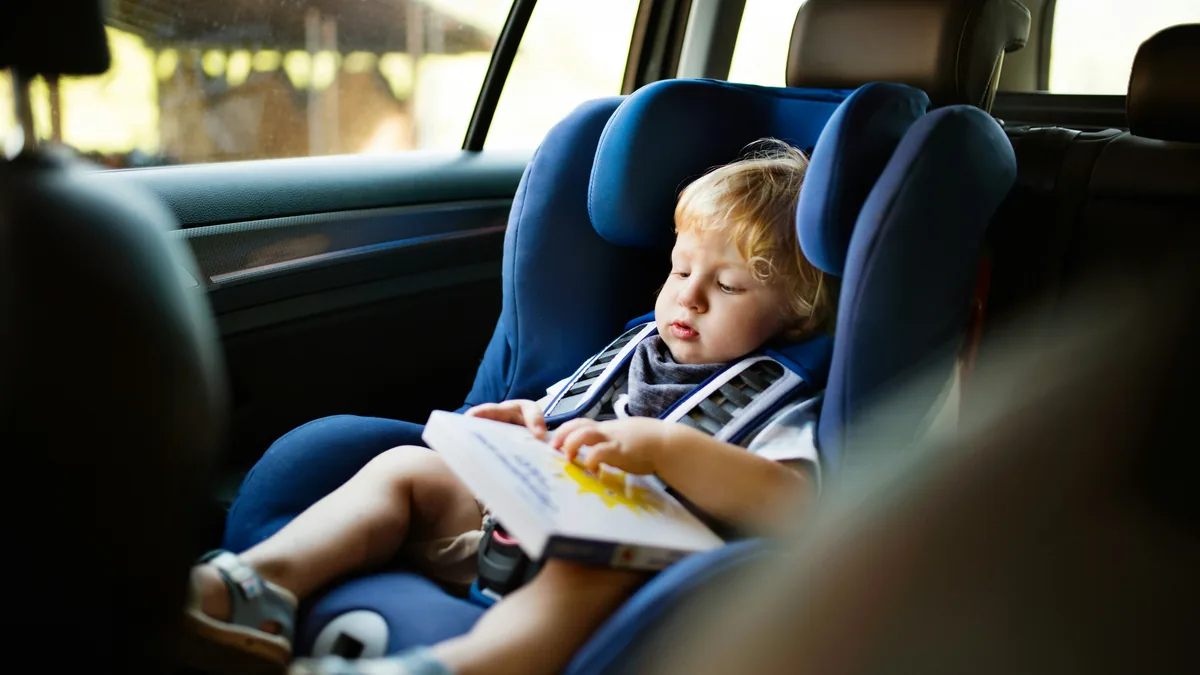
What happens next with the Evenflo settlement
The claim deadline passed on November 24, 2025. New claims for this settlement are no longer being accepted.
Payments come after approval, and after any appeals. Anyone who objected to the settlement can ask a higher court to look at it again — an appeal — and that has to finish first. Eligible payments are sent once approval is final, and the stretch from a claim deadline to money in hand often runs a year or more. It varies from one settlement to the next.
Filed this claim with Chimo? The status of your claim is on the claims page in your account.
Settlements you can still claim in October, 2026
Bestway
$40
Dr. Squatch
$12.50
Apple
$25
Evenflo Class Action Lawsuit
A class action lawsuit has been filed against Evenflo Company, Inc. due to claims it misled parents about the safety of its Big Kid booster seats. The evenflo Big Kid Booster Seat class action case (MDL No. 20-md-2938, Judge Denise Casper, District of Massachusetts) was brought by plaintiffs including Mona-Alicia Sanchez and Heather Hampton, represented by attorneys Steve W. Berman (Hagens Berman), Mark P. Chalos (Lieff Cabraser), and Martha Geer (Milberg).
The evenflo Big Kid Booster Seat lawsuit details allege the company marketed the seats as “side impact tested” and safe at just 30 lbs, despite no federal side-impact standard. The evenflo Big Kid Booster Seat legal claims include fraudulent concealment and deceptive practices.
Evenflo Class Action Settlement - $3,050,000
If you’re searching for the Evenflo Big Kid Booster Seat settlement update, here’s what you need to know. The case, In re Evenflo Co., Inc. Marketing, Sales Practices, and Product Liability Litigation (MDL No. 20-md-2938, D. Mass., Judge Denise Casper), reached a $3.05 million settlement fund. Plaintiffs alleged that Evenflo misled parents by marketing its Big Kid booster seats as safe for children weighing just 30 pounds and “side impact tested,” despite no federal side-impact standards at the time.
The Evenflo Big Kid Booster Seat lawsuit settlement amount covers all consumers in the U.S. (including DC, Puerto Rico, Guam, and U.S. Virgin Islands) who purchased a Big Kid booster seat between January 1, 2008 and December 31, 2022. Eligible claimants may receive a cash payout from the fund plus a $25 Evenflo credit per seat (up to 2 seats).
As part of the settlement, Evenflo also agreed to adjust its marketing, publish safety notices about weight recommendations, and release an educational video on when to transition to booster seats.
Find out if your eligible--submit your claim before the deadline!
Claims closed: November 24, 2025
Big Kid Booster Seat Class Action Payout: $25 per Seat
The Evenflo settlement offers each claimant a $25 credit per Big Kid booster seat, capped at two seats. Why only two? Court documents explain the cap was set to prevent households from mass-claiming seats well beyond typical use. It reflects the “average” family purchase patterns uncovered during discovery, where most families owned one or two boosters, not more.
Interestingly, no receipt is required. Instead, claimants can submit details such as retailer, year, and seat color—or even a photo of the booster or packaging. While unusual in class actions, this flexibility acknowledges that purchases date back as far as 2008, making receipts nearly impossible to locate. To avoid abuse, the Settlement Administrator (Epiq) must use fraud-detection systems. Photos, for instance, may be cross-checked against known model patterns, and households submitting more than five claims are flagged for manual review.
The $25 credit wasn’t arbitrary. Negotiators tied it to the average retail cost of a booster seat add-on or accessory, ensuring consumers received value while Evenflo avoided open-ended liability. Claimants will also receive a cash payout from the $3.05M fund, which could be more or less than $25 depending on how many valid claims are filed. Payments are expected after final court approval in 2026.
Big Kid Booster Seat Class Action Eligibility
Wondering about evenflo Big Kid Booster Seat class action eligibility? The settlement applies to anyone who purchased a Big Kid booster seat in the U.S. (including DC and territories) between January 1, 2008 and December 31, 2022. To confirm eligibility, the claim form may ask:
Did you buy an Evenflo Big Kid booster seat during the class period?
Where (city/state/retailer) and when was it purchased?
Can you provide proof (receipt, invoice, card statement) or a photo of the seat/packaging?
How many seats did you purchase (up to 2 per claimant)?
Court documents note these questions ensure only verified evenflo Big Kid Booster Seat class action claimants receive benefits, while also allowing photos and retailer details if receipts are lost—an unusual flexibility in class actions.
Check if you are eligible to join evenflo Big Kid Booster Seat class action free!"
FAQ
Anyone in the U.S. (including territories) who purchased a Big Kid booster seat between Jan 1, 2008 – Dec 31, 2022.
You can submit retailer, city/state, and year of purchase info, or even a photo of the booster seat or packaging.
Up to two seats per household; the settlement caps claims at two to match average family use.
Claimants will recieve a check—plus a $25 Evenflo credit per seat.
After final approval and appeals finish (expected 2026).
Evenflo used its own internal test, not a federal standard—because none existed for boosters at the time.
It’s a negotiated compromise after failed mediations in 2023 and 2024, balancing claim volume with litigation risk.
Each valid claimant’s cash payout increases, since the $3.05M fund is distributed pro rata.
The administrator uses model recognition and purchase detail cross-checking, and flags households claiming more than five seats.
Evenflo must release a safety video on proper booster use, update weight recommendations, and clarify that side-impact tests are self-designed.