Whole Foods Class Action Lawsuit
Jennifer Goodwin's lawsuit said Whole Foods sold 365 Organic Hot Cocoa in California in canisters with non-functional empty space. Whole Foods denied it and settled for up to $650,000.
Chimo is a private monitoring and filing service and is not the court, the settlement administrator or a law firm.
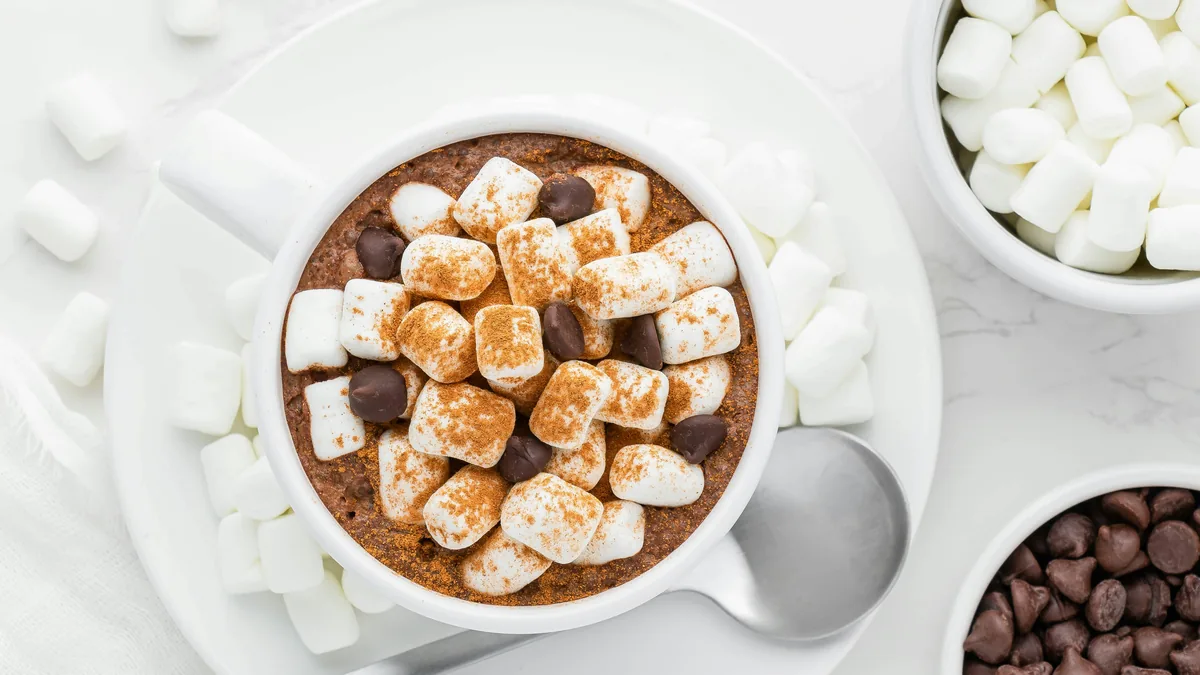
What happens next with the Whole Foods settlement
The claim deadline passed on October 14, 2025. New claims for this settlement are no longer being accepted.
Payments come after approval, and after any appeals. Anyone who objected to the settlement can ask a higher court to look at it again — an appeal — and that has to finish first. Eligible payments are sent once approval is final, and the stretch from a claim deadline to money in hand often runs a year or more. It varies from one settlement to the next.
Filed this claim with Chimo? The status of your claim is on the claims page in your account.
Settlements you can still claim in November 2026

Bigelow Tea
$10

Visa & Mastercard
$380

Generic Drug Makers
$59
Whole Foods Class Action Lawsuit
Jennifer Goodwin sued over how much cocoa was inside the 12 oz canisters of Whole Foods Market's 365 Organic Hot Cocoa sold in California. She alleged that Whole Foods Market sold the mix in large, opaque canisters that held non-functional empty space, meaning empty room that does no job such as protecting the product. This is known as slack-fill. According to the lawsuit, California shoppers judged the amount by the size of the canister and believed they were getting more cocoa than they paid for.
The lawsuit claimed negligent misrepresentation and violations of three California consumer laws (the Consumer Legal Remedies Act, the Unfair Competition Law and the False Advertising Law), which together bar businesses from misleading shoppers about what they are buying. The case, Goodwin v. Whole Foods Market, Inc., et al., No. 21STCV40456, was filed on November 3, 2021, in the Superior Court of California, County of Los Angeles, before Judge Carolyn B. Kuhl. The settling defendants are Mrs. Gooch's Natural Food Markets, Inc., and Whole Foods Market California, Inc. Kazerouni Law Group was appointed class counsel, the lawyers who represent the whole group.
Whole Foods Market denies the allegations and says it did nothing wrong, and the court did not decide who was right. Both sides settled to avoid the cost and uncertainty of further litigation. Whole Foods Market agreed to pay no more than $650,000 in total and to add a fill line to the label of canisters sold in California. New claims can no longer be filed.
Whole Foods Class Action Settlement - $650,000
Whole Foods agreed to a settlement of up to $650,000 over allegations that its 365 Organic Hot Cocoa canisters contained misleading empty space (slack-fill). Of that, $100,000 is shared pro rata among eligible class members who bought a 12 oz canister of “365 Organic Hot Cocoa Rich Chocolate Flavor Mix” or “365 Everyday Value Organic Hot Cocoa Rich Chocolate Flavor Mix” in California between November 3, 2017, and March 13, 2025. Approximately 30,460 Amazon customers whose contact details the administrator already had were eligible for payment without filing, while others had to submit claims.
Up to $550,000 covers attorneys' fees and costs (a request of $452,464), notice and administration (an estimated $92,536) and a service award of up to $5,000 for Jennifer Goodwin. Those are paid separately from the $100,000, and any fees the court does not award are added to it. Whole Foods also agreed to add a fill line to the labels of products sold in California to indicate the actual contents inside. Class counsel estimated the prorated check at about $2.90, depending on how many people filed. The settlement covers an estimated 156,662 class members across California. Proof of purchase was not required for up to two claims per household.
The deadline to submit a claim was October 14, 2025, and payments were to be distributed after court approval and resolution of any appeals. A final approval hearing was scheduled for December 3, 2025.
Claims closed: October 14, 2025
Organic Hot Cocoa Class Action Payout: About $2.90 per claim (estimate)
Eligible class members shared $100,000 pro rata, meaning each valid claim was eligible for an equal share. Class counsel estimated the prorated check at about $2.90, and said the exact amount depends on how many valid claims are received. Each class member could submit one claim form, however many canisters they bought. Each household could submit up to two claims without proof of purchase; a third or later claim from the same household required proof.
Payments to eligible class members were to start within 30 days after the settlement's Effective Date, which the notice estimated at about February 3, 2026. A final approval hearing was scheduled for December 3, 2025. The default payment method is a paper check, and money from uncashed checks goes to a second distribution if that is practical, then to a charity the court approves.
Slack Fill Class Action Payouts
Organic Hot Cocoa Class Action Eligibility
Whole Foods Hot Cocoa class action eligibility came down to whether a purchase fit the court-approved class definition. The claim form checked three things:
The product was one of the two covered 12 oz canisters.
The purchase was made at a California store, or remotely while the buyer was in California.
The purchase was made between November 3, 2017, and March 13, 2025.
Purchases made outside California do not qualify. Each class member could submit one claim form, however many canisters they bought, and a household's third and later claims needed proof of purchase. Whole Foods Market, its affiliates, employees, officers and directors, and the judge and mediator were excluded from the class.
FAQ
This lawsuit alleges that Whole Foods Market sold 12 oz canisters of hot cocoa mix that contained approximately 44% empty space (called "slack-fill"). Plaintiff Jennifer Goodwin claims this misled consumers into thinking they were purchasing more product than they actually received, violating California consumer protection laws including the Consumer Legal Remedies Act (CLRA), Unfair Competition Law (UCL), and False Advertising Law (FAL).
It depended on the situation. Class members who purchased the product on Amazon.com and whose contact information Amazon had (an estimated 30,460 customers) were eligible for a settlement payment without submitting a claim form. All other class members had to submit a claim form by October 14, 2025. Proof of purchase was generally not required, except if more than two claims were submitted per household.
As part of the settlement, Whole Foods agreed to add a "fill line" to the product's label for units sold in California. The fill line visually indicates the approximate amount of contents within the container, helping consumers understand how much product is actually inside the opaque canister.
Amazon.com agreed to provide customer contact information for approximately 30,460 people who purchased the product through its platform during the class period. These customers were eligible for settlement payments without filing claim forms because Amazon could identify them and provide their mailing addresses to the settlement administrator.
All other class members (an estimated 126,202 people) had to submit claim forms because there was no practical way to identify them without going through over 1,000 different financial institutions that processed credit card transactions. The plaintiff's expert analysis revealed transactions involving 1,445 different financial institutions, including 986 under Visa and 354 under Mastercard networks. Serving subpoenas on all these institutions would cost over $60,000 just in service fees and could take years to complete.
Under the settlement, if 1,000 or more class members had submitted valid requests for exclusion (opt-out), either the plaintiff or defendants could terminate the entire settlement agreement within 20 days of receiving notice. This is a relatively low threshold compared to the estimated 156,662 class members, meaning that if less than 1% of the class opted out, the whole settlement could have collapsed.
If this termination threshold had been triggered, the parties would have returned to their legal positions as of February 13, 2024, essentially restarting the litigation from scratch.
Sources
These are the court's own records for this case. They are hosted here unchanged, so you can check anything on this page against the documents themselves.
- Whole Foods Hot Cocoa Class Action Third Amended Complaint (PDF) Complaint · Filed October 28, 2024 · Superior Court of California, County of Los Angeles · Case 21STCV40456
- Whole Foods Hot Cocoa Class Action Settlement Agreement (PDF) Settlement agreement · Superior Court of California, County of Los Angeles · Case 21STCV40456
- Whole Foods Hot Cocoa Class Action Amended Preliminary Approval Order (PDF) Court order · Filed June 26, 2025 · Superior Court of California, County of Los Angeles · Case 21STCV40456
- Whole Foods Hot Cocoa Class Action Order Granting Final Approval of Settlement (PDF) Court order · Superior Court of California, County of Los Angeles · Case 21STCV40456
- Whole Foods Hot Cocoa Class Action Final Judgment (PDF) Court order · Superior Court of California, County of Los Angeles · Case 21STCV40456
- Whole Foods Hot Cocoa Class Action Long Form Notice (PDF) Class notice · Superior Court of California, County of Los Angeles · Case 21STCV40456
- Whole Foods Hot Cocoa Class Action Claim Form (PDF) Claim form · Superior Court of California, County of Los Angeles · Case 21STCV40456
Class Actions
Unclaimed Property
Sign up for updates on new lawsuits
and unclaimed money opportunities
Chimo AI Inc. is a private company. We are not a law firm, do not give legal advice, and are not affiliated with or endorsed by any court, settlement administrator, defendant or government agency.