What happens next with the Corsair Gaming settlement
The claim deadline passed on October 28, 2025. New claims for this settlement are no longer being accepted.
Payments come after approval, and after any appeals. Anyone who objected to the settlement can ask a higher court to look at it again — an appeal — and that has to finish first. Eligible payments are sent once approval is final, and the stretch from a claim deadline to money in hand often runs a year or more. It varies from one settlement to the next.
Filed this claim with Chimo? The status of your claim is on the claims page in your account.
Settlements you can still claim in October, 2026

Bestway
$40

Dr. Squatch
$12.50
Apple
$25
Corsair Gaming Class Action Lawsuit
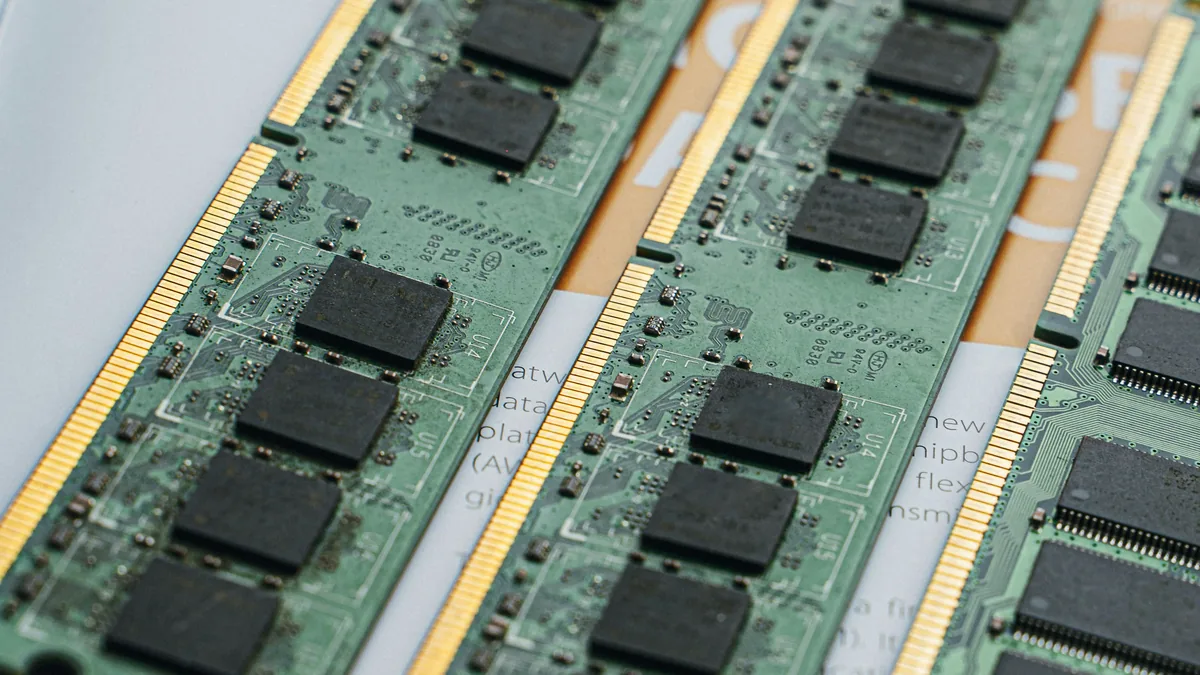
A class action lawsuit has been filed against Corsair Gaming, Inc. due to misleading advertising of its DDR4 and DDR5 desktop memory speeds. Plaintiffs Antonio McKinney, Clint Sundeen, and Joseph Alcantara allege that Corsair promoted high MHz speeds that actually required risky overclocking, not default out-of-box performance.
The Corsair Gaming Memory class action case (McKinney et al. v. Corsair Gaming, Inc., Case No. 4:22-cv-00312-JST, U.S. District Court, Northern District of California, Judge Jon S. Tigar) details violations of consumer protection laws and breach of warranty.
Represented by Dovel & Luner, LLP and Kneupper & Covey, PC, plaintiffs secured a $5.5M settlement fund according to court-filed settlement documents.
Corsair Gaming Class Action Settlement - $5,500,000
The Corsair Gaming Memory settlement update confirms a $5.5 million non-reversionary fund—meaning every dollar will go to class members, lawyers, and administration costs, with no money returning to Corsair. This resolves allegations that Corsair misled consumers about DDR4 and DDR5 desktop RAM speeds.
The settlement covers all U.S. purchasers from January 14, 2018 through July 2, 2025 who bought Corsair DDR4 (over 2133 MHz) or DDR5 (over 4800 MHz) desktop memory. Court filings show Corsair also agreed to update packaging, adding “up to” disclaimers and stating that overclocking is required—an uncommon corrective measure in tech settlements.
Payouts will be distributed pro rata, meaning the $5.5M fund will be divided fairly among approved claims based on how many products you purchased. Class members can submit up to five claims without proof of purchase. The settlement administrator, Angeion Group, will oversee distribution. The Corsair Gaming Memory settlement eligibility deadline for filing a claim is October 28, 2025.
Find out if your eligible--submit your claim before the deadline!
Claims closed: October 28, 2025
DDR4 & DDR5 Desktop Memory Class Action Payout: Estimated $138 - $183 per Purchase
Wondering how much will you'll get from the Corsair Gaming Memory lawsuit? Court filings estimate that the Corsair Gaming Memory settlement amount per person could range from $138 to $183 per purchased product, depending on the number of claims filed. Because payouts are calculated pro rata, the more valid claims there are, the smaller each individual share. While no proof is required for up to five purchases, providing receipts or other documentation for fewer than five may strengthen your claim against fraud checks and reduce the risk of rejection.
The Corsair Gaming Memory settlement payout date will follow the January 8, 2026 final approval hearing. Payments are expected within months, but delays can arise from appeals or verification. The settlement is overseen by Angeion Group, a well-known administrator with a track record of handling major tech settlements. While generally reliable, Angeion has faced criticism in past cases for slow processing when large claim volumes occurred—so monitoring updates is recommended.
Attorneys will receive $1.375 million (25% of the fund) plus expenses, reducing the net pool available for claimants. Even after fees, however, the projected range of $138–$183 per purchase remains strong compared to many consumer settlements.
Don't miss your payout--file your claim today!
DDR4 & DDR5 Desktop Memory Class Action Eligibility
To meet Corsair Gaming Memory class action eligibility, you must have purchased DDR4 desktop memory rated above 2133 MHz or DDR5 memory rated above 4800 MHz between January 14, 2018 and July 2, 2025. Purchases must have occurred in the United States, whether online or at a physical retailer. The settlement specifically excludes laptop and SODIMM memory, which were mentioned in earlier complaints but ultimately left out of the agreement. The claim form will ask where and when you purchased, what model you bought, and whether you can provide proof of purchase. While proof is not required for up to five claims, providing receipts even for fewer purchases can reduce scrutiny and speed approval.
The administrator, Angeion Group, has a track record of aggressively monitoring fraud in past settlements by using duplicate IP detection, address-matching, and receipt verification tools, and courts have cited their experience in filtering out suspicious mass claims.
Check if you are eligible to join Corsair Gaming Memory class action free!
FAQ
Anyone in the U.S. who purchased Corsair DDR4 (over 2133 MHz) or DDR5 (over 4800 MHz) desktop memory between Jan 14, 2018 and Jul 2, 2025.
Claimants may receive $138–$183 per qualifying purchase, depending on the number of valid claims.
No proof is needed for up to five purchases; receipts are required for more than five and strengthen all claims.
Claims must be submitted by October 28, 2025.
After the January 8, 2026 final approval hearing, assuming no appeals or major fraud investigations delay distribution.
Laptop sticks (SODIMM) were carved out because the theory of deception—and the evidence—were most uniform for retail desktop DIMMs. Desktop buyers typically saw Corsair’s retail packaging and product pages that highlighted high MHz “rated” speeds, while actually needing BIOS/XMP-style overclocking to reach them. With laptops, that uniform exposure breaks down: SODIMMs are often pre-installed by OEMs, many laptop BIOSes lock out XMP, and shoppers may never see Corsair’s retail labeling at purchase. That variability creates Rule 23 problems (commonality/predominance) and a muddier damages model.
The settlement also requires packaging/website label changes (“up to” speeds + overclocking/BIOS note). Those remedies map cleanly to retail desktop boxes and reseller pages—far less so to OEM laptop channels. Practically and legally, narrowing to desktop DIMMs delivered cleaner class boundaries, a consistent misrepresentation record, and scalable injunctive fixes—maximizing approval odds and value per claimant.
Bottom line: SODIMM/laptop memory wasn’t included because exposure, BIOS behavior, and sales context aren’t uniform enough to certify and administer at scale, while desktop DIMMs presented a cohesive class with clear corrective labeling leverage.
Here’s what truly sets this one apart from “typical” tech settlements:
Cash + targeted fixes that match the harm. Beyond a $5.5M non-reversionary cash fund, Corsair must update packaging, website, and reseller spec sheets to list speeds as “up to” and state that reaching them requires overclocking/PC BIOS adjustments and depends on motherboard/CPU—precisely the conduct plaintiffs challenged, not a vague promise to “review practices.”
Broad, modern product scope. It covers DDR4 and DDR5 desktop memory (not just one generation) and is nationwide, consolidating what could have been many state-by-state cases into one coherent deal with a single fund.
Friction-lowering claims design. You can claim up to five products without proof (proof required beyond five). That’s unusual in hardware cases and acknowledges that many buyers don’t retain RAM receipts years later—while still allowing verification for higher-volume claims.
Pro-class fee safeguards. Fees are sought at the Ninth Circuit 25% benchmark and there’s no “clear-sailing” clause—the defendant can oppose fees. That reduces collusion risk and keeps more scrutiny on the net to the class.
Plain-cash, pro-rata distribution. No coupons or vouchers. The fund is split among approved claims, yielding an estimated $138–$183 per purchase given expected claim rates.
Tight timelines. Claim deadline: Oct 28, 2025. Final approval hearing: Jan 8, 2026. Payments typically issue ~45 days after final approval/appeals, giving consumers a clear runway rather than an open-ended wait.
Angeion uses IP tracking, address and bank cross-matching, and flagged “receipt farm” scanning. Their fraud filters were praised in prior high-volume settlements like Volkswagen Clean Diesel.
Most tech settlements pay $10–$50. Here, relatively low claims rates plus a $5.5M fund mean per-claim payouts are unusually large.
Plaintiffs brought in economists and consumer behavior experts to quantify the price premium caused by Corsair’s speed advertising. This evidence directly influenced the size of the fund.
Economists like Colin Weir and Hal Singer quantified how much extra consumers paid because of Corsair’s MHz claims. By isolating Corsair’s RAM sales with higher advertised speeds, they argued the company captured a measurable premium compared to baseline memory. That damages model gave the plaintiffs hard numbers to push for a $5.5M non-reversionary fund rather than token coupons.
Marketing expert Thomas Maronick ran surveys showing that ordinary buyers read MHz labels as promises of out-of-box performance, not as “overclocking potential.” This evidence went to materiality (the label mattered) and common impact across the class, key hurdles for Rule 23 certification.
Computer science expert Kevin Almeroth explained that Corsair’s modules shipped with default JEDEC speeds (2133 MHz for DDR4, 4800 MHz for DDR5) and only hit advertised speeds with BIOS/XMP changes. He likened this to selling a car advertised at “200 mph” that requires aftermarket tuning. This made the misrepresentation legible to the court.
Corsair fought hard to exclude these experts under Daubert, arguing their models and surveys were speculative. The fact that plaintiffs’ testimony survived to mediation gave them leverage: Corsair risked facing a jury with credible, technical, and economic proof of deception.
The experts gave plaintiffs both economic heft (quantified damages) and credibility with a tech-heavy product, which explains why this settlement is larger and more corrective than many consumer hardware cases.