Compass Group Class Action Lawsuit
A lawsuit said Canteen vending machines run by Compass Group charged card users more than the posted price. Compass denies it; the $6.94 million settlement was approved on January 9, 2026.
Chimo is a private monitoring and filing service and is not the court, the settlement administrator or a law firm.
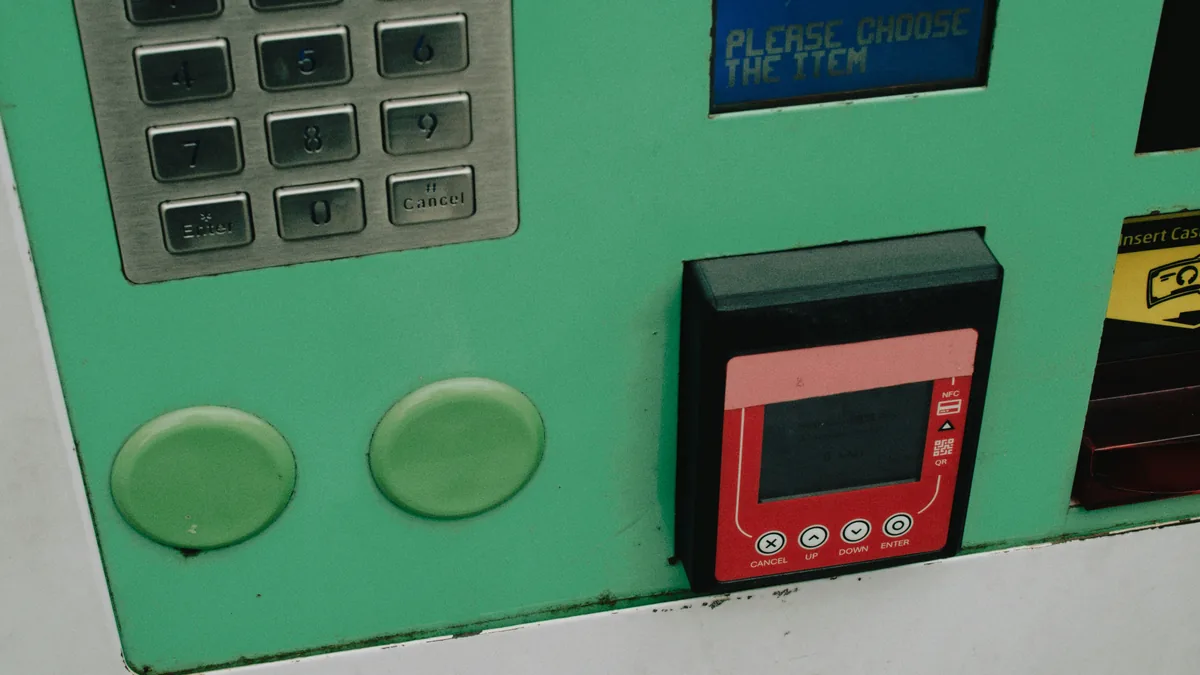
What happens next with the Compass Group settlement
The claim deadline passed on November 14, 2025. New claims for this settlement are no longer being accepted.
The court approved the settlement on January 9, 2026. Payments are sent once that approval is final: after the time for anyone to appeal it runs out, or after any appeal ends.
Then the payments go out. The settlement administrator, the firm the court appointed to process claims, sends payments to eligible claimants once it has reviewed the claims. How long that takes varies from one settlement to the next.
Filed this claim with Chimo? The status of your claim is on the claims page in your account.
Settlements you can still claim in November 2026
Apple
$25

CruiseBuilder
$425

Visa & Mastercard
$380
Compass Group Class Action Lawsuit
James Jilek sued Compass Group USA, Inc., which does business as Canteen, saying that certain of its vending machines charged credit, debit, and prepaid card users more than the displayed price without disclosing the extra charge.
The Compass Group class action case, Jilek v. Compass Group USA, Inc., Case No. 3:23-cv-00818-JAG-DCK, is overseen by Judge John A. Gibney, Jr., in the U.S. District Court for the Western District of North Carolina. According to the notice, the parties had litigated the dispute since 2018, including lawsuits in several jurisdictions that were consolidated into this case.
The lawsuit primarily alleged that charging more than the displayed price was a breach of contract. Compass denies all claims and allegations of wrongdoing, and the court has not decided who is right.
The settlement amount is $6.94 million. The court granted final approval on January 9, 2026, and awarded class counsel $2,313,333.33 in fees and $147,660.04 in costs, and James Jilek a $10,000 service award.
Compass Group Class Action Settlement - $6,940,000
Compass Group USA, operating as Canteen, agreed to a $6.94 million class action settlement of allegations that certain vending machines charged card users more than the displayed cash price without disclosure. Fees, costs, administration and a service award come out of that amount first, and the rest is paid to class members with valid claims; no money returns to the company. The court granted final approval on January 9, 2026.
Who was covered? Anyone who used a credit, debit, or prepaid card to make purchases from Canteen “Subject Vending Machines” between 2014 and July 9, 2025, could qualify. These machines offered both cash and card options but charged higher amounts on card transactions without posting a dual-price label or cash discount sticker.
No proof of purchase was required. Claimants only needed to attest under penalty of perjury to the number of vending machine purchases made. The claim deadline was November 14, 2025, and new claims can no longer be filed.
Claims closed: November 14, 2025
Vending Machines Class Action Payout
The Compass Group settlement set a payment for each eligible claimant based on how many card purchases they made from a Subject Vending Machine.
Settlement payments ranged from $30 to $360, based on the number of vending machine purchases made with a credit, debit, or prepaid card between 2014 and July 9, 2025. Those amounts could be reduced pro rata, meaning proportionally, if the net fund could not pay every valid claim in full.
Number of Purchases
Settlement Payment
Up to 250
$30
251–500
$60
501–750
$90
751–1,000
$120
1,001–1,250
$150
1,251–1,500
$180
1,501–1,750
$210
1,751–2,000
$240
2,001–2,250
$270
2,251–2,500
$300
Over 2,500
$360
Several factors affect the Compass Group settlement payout. The number of valid claims filed influences individual amounts, since more claims may reduce payments proportionally. Accuracy of the claim form is also important, as a claim with incomplete or false information can be found invalid. Additionally, purchase history plays a role, with higher purchase counts placing a claimant in a higher payment tier.
The court held the final approval hearing on January 9, 2026, and approved the settlement that day, directing the settlement administrator to pay claimants under the settlement agreement. Payments are made to eligible claimants after the settlement takes effect and any appeals are resolved.
Payouts may take longer for several reasons, including appeals from objectors and checks required to validate claims. The court overruled the one objection it received.
Vending Machines Class Action Eligibility
Compass Group class action eligibility applied if you used a credit, debit, or prepaid card at a Canteen “Subject Vending Machine” between 2014 and July 9, 2025. Only machines that charged more than the displayed price for card purchases are included. Machines that displayed both cash and card prices, had a screen showing both, or had a “cash discount” sticker are excluded.
On the claim form, claimants had to choose the purchase tier that applied (from up to 250 purchases to more than 2,500), list each city and state where they made the purchases, and certify this information under penalty of perjury.
This tiered structure directly ties each claimant’s payment to how often they used the machines with undisclosed card surcharges.
FAQ
Only machines that (a) offered both cash and card payment options and (b) did not display a cash discount sticker or dual-price digital screen qualify. Any machine with a “cash discount” label or a screen showing both cash and card prices is excluded.
Notice was given mainly through publication and online ads, and the class covers U.S. purchases from qualifying machines, which the notice places in 30 states. A full list of Subject Vending Machine locations is maintained only on the settlement website:
www.vendingmachinesettlement.com/locations
No. Claimants only certified under penalty of perjury the number of purchases they made by selecting the correct tier on the claim form. The parties agreed to a tiered payment structure without requiring proof of each transaction.
Possibly. The notice said claimants did not need to send proof of purchases with the claim form but could later be asked for more information, and a claim found invalid was excluded. Claimants certified the number under penalty of perjury, so the form asked for an honest count.
No money returns to Compass. If valid claims are paid in full and money remains in the net settlement fund, the parties propose a cy pres recipient, an organization whose interests reasonably match the class's, and the court decides whether to approve it.
Sources
These are the court's own records for this case. They are hosted here unchanged, so you can check anything on this page against the documents themselves.
- Compass Group Class Action Settlement Agreement, with Exhibits (Joint Declaration Exhibit 1) (PDF) Settlement agreement · Filed May 14, 2025 · United States District Court, Western District of North Carolina, Charlotte Division · Case 3:23-cv-00818-JAG-DCK
- Compass Group Class Action Preliminary Approval Order (PDF) Court order · Filed July 9, 2025 · United States District Court, Western District of North Carolina, Charlotte Division · Case 3:23-cv-00818-JAG-DCK
- Compass Group Class Action Final Judgment and Order of Dismissal with Prejudice (PDF) Court order · Filed January 9, 2026 · United States District Court, Western District of North Carolina, Charlotte Division · Case 3:23-cv-00818-JAG-DCK
- Compass Group Plaintiffs' Amended Class Action Complaint (PDF) Complaint · Filed December 18, 2018 · United States District Court, Western District of North Carolina, Charlotte Division · Case 3:23-cv-00818-JAG-DCK
The full case file is on the court docket: view the docket.
Class Actions
Unclaimed Property
Sign up for updates on new lawsuits
and unclaimed money opportunities
Chimo AI Inc. is a private company. We are not a law firm, do not give legal advice, and are not affiliated with or endorsed by any court, settlement administrator, defendant or government agency.